Introduction:
I am about to finish my first reading of what is arguably the father of all biographies – The Life of Samuel Johnson by his friend James Boswell. This book, published in 1791, consists of 997 pages of small print and is written in a flowery and over-elaborate eighteenth century prose, which for me was not an easy read, although it became easier as time went on. I made notes as I progressed through the book. In any case, my interest in Johnson who wrote the first recognised dictionary of the English language was stimulated sufficiently to write about him here, including notes on his connections with Derby and Derbyshire.
Summary of the Life of Samuel Johnson:
Samuel Johnson (usually referred to in popular culture as Dr Johnson) was born in Lichfield in 1709. His birthplace still stands there in Market Square and can be visited (Samuel Johnson Birthplace Museum). Opened in 1910, this museum is well worth seeing, and well worth going to see! Johnson spent most of the first twenty-seven years of his life in this house, before going to London in 1737.
From an early age. Johnson’s physical appearance was described by many observers as somewhat repellent. As a child, Johnson suffered from what used to be described as scrofula, a skin infection which could have been tuberculous (in the eighteenth century there could not be an accurate diagnosis), but nonetheless led to an unpleasant and permanent scarring of the head and neck. Johnson also from an early age and throughout his life suffered an alarming and unpredictable tendency to display a variety of tics, probably some sort of Tourette Syndrome.
An intelligent child, Johnson attended a couple of local grammar schools and then went on to study at Pembroke College, Oxford, but a shortage of funds forced him to leave without a degree. He was later given his degree just before the 1755 publication of his Dictionary.
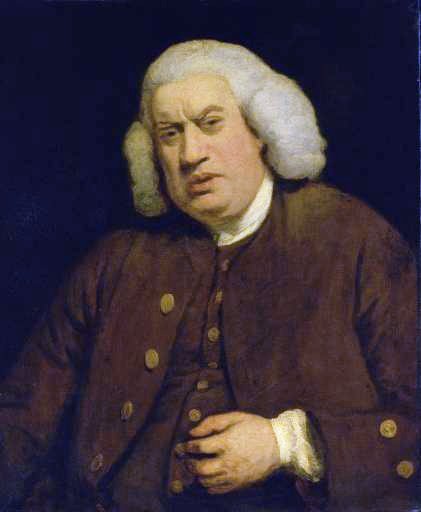
In his 20s and 30s, Johnson had spells working as a schoolteacher as well as developing and using his talents as a poet, playwright, author, literary critic and general wit. During these decades, Johnson was only just able to keep himself housed and fed. In 1746, Johnson’s talents, now well-recognised, led him to being contracted to write his Dictionary of the English Language. This project took him eight years to complete, and the result became the most commonly used English dictionary ever, becoming the basis for all English dictionaries during the 150 years between its first publication and the completion of the Oxford English Dictionary in 1928. Johnson didn’t carry out this work alone – he had a team of assistants.
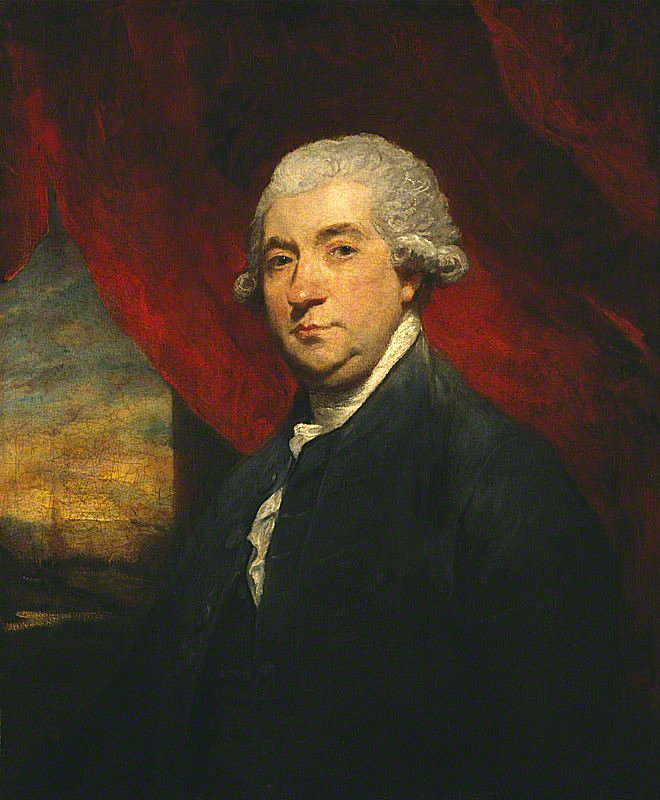
After all this effort was completed (as well as during it), Johnson continued with his literary work throughout the rest of his life. In 1763, he first met a young Scottish lawyer, James Boswell, who would become one of his best friends and of course his biographer. They travelled widely together, including a journey described by Boswell in his Journal of a Tour to the Hebrides (1786), which I have read. Boswell also accompanied Johnson on his visits to Derby and Ashbourne, as I will describe.
During the final few years of his life, Johnson’s health deteriorated (as it usually does, I suppose!). He suffered a stroke and what very much sounds like congestive cardiac failure and he died in London on the 13th December 1786. He is buried in Westminster Abbey.
Samuel Johnson in Derby and Derbyshire:
When reading of Samuel Johnson visiting Derby and Derbyshire, it is usually the case that Johnson is visiting his old schoolfriend, Dr Taylor, at Dr Taylor’s home in Ashbourne. I can find no evidence of Johnson ever visiting this area without staying at Dr Taylor’s, other than the occasion of Johnson’s marriage in 1735, when the wedding took place in St Werburgh’s Church, Derby. This church is redundant and empty, but still stands.
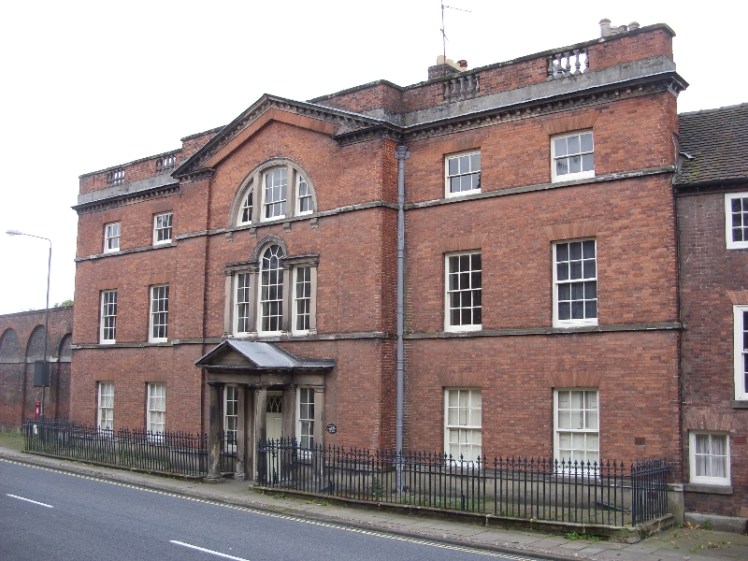
Dr John Taylor (1711-1788) was born and baptised in Ashbourne. He attended Lichfield Grammar School with Johnson and would have gone on with him to Pembroke College, Oxford but he chose to attend Christ Church College there instead. A very wealthy man, Dr Taylor had many fingers in many pies. He was Rector of Market Bosworth, as well as being Minister in the chapels of Broadway, Westminster and St. Margaret’s, Westminster. He was also appointed as J.P. of Derbyshire in 1761, and after that was known as the “King of Ashbourne”. He was also a landowner and farmer and bred cattle. Dr Taylor lived most of his life in Ashbourne, at a house called The Mansion, which still exists today as a private house. He died in Ashbourne and is buried in St Oswald’s Church – reputedly in the nave.
Boswell recounts his first visit to Ashbourne, in the company of Johnson (Johnson had been many times before) and his first meeting with Dr Taylor in 1776 in The Life of Samuel Johnson:
On Tuesday, March 26, there came for us an equipage properly suited to a wealthy well-beneficed clergyman – Dr Taylor’s large, roomy post-chaise, drawn by four stout plump horses, and driven by two steady jolly postillions, which conveyed us to Ashbourne, where I found my friend’s schoolfellow living upon an establishment perfectly corresponding with his substantial creditable equipage: his house, garden, pleasure-grounds, table, in short everything good, and no scantiness appearing. Every man should form such a plan of living as he can execute completely………….Dr Taylor had a good estate of his own, and good preferment in the church, being a prebendary of Westminster, and rector of Bosworth………
The next year (1777), Johnson and Boswell were again visiting Dr Taylor, and decided to visit Kedleston Hall and Derby.
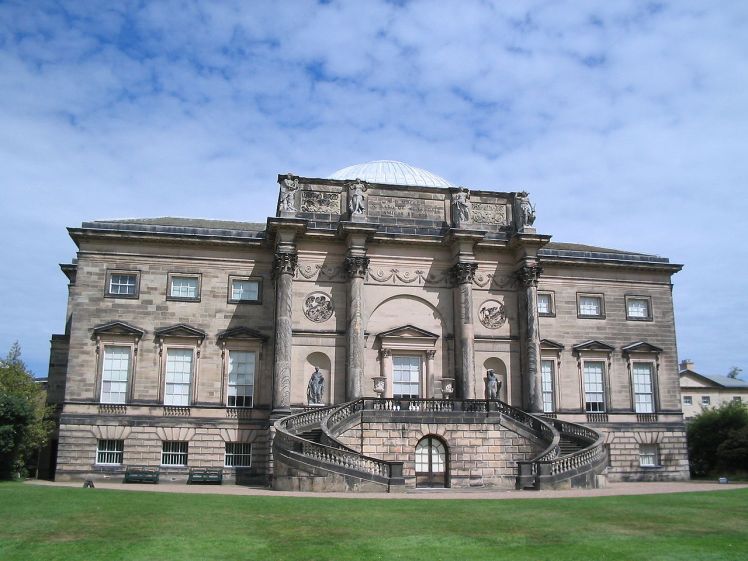
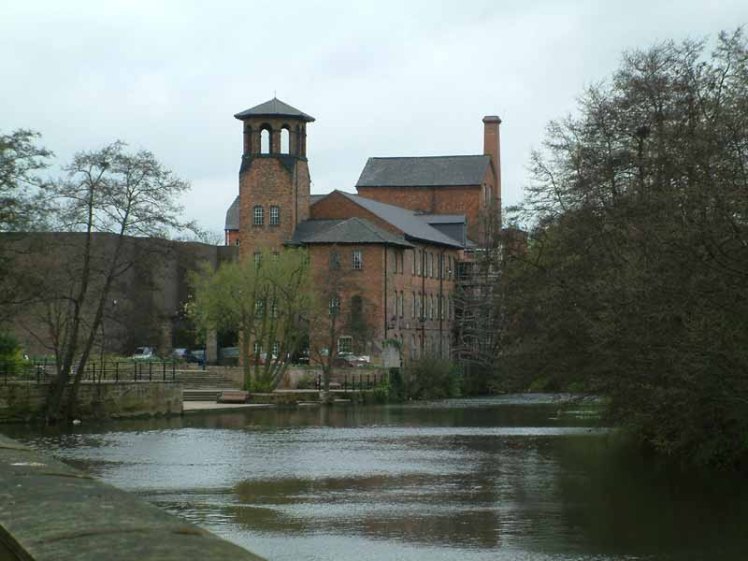
They left Ashbourne on Friday, September 19th after breakfast. They arrived at Kedleston Hall, and were given a tour of Lord Scarsdale’s house by the “well-drest elderly housekeeper”. They were well impressed by the house and the magnificent grounds outside including “the excellent smooth gravel roads; the large piece of water formed by his Lordship from some small brooks”. They also met Lord Scarsdale himself. After that, they continued their journey to Derby and had a good look round the china factory. Boswell stated that “I felt a great pleasure in walking about Derby”. After that, they had a look round the Silk Mill, which then still quite new. They then returned to Ashbourne. The exact route is unknown, but I bet it wasn’t along the A52!
Dr Philip Dodgson, Derby, January 2024.
 DR PHILIP DODGSON of DERBY on DR SAMUEL JOHNSON in DERBY and DERBYSHIRE